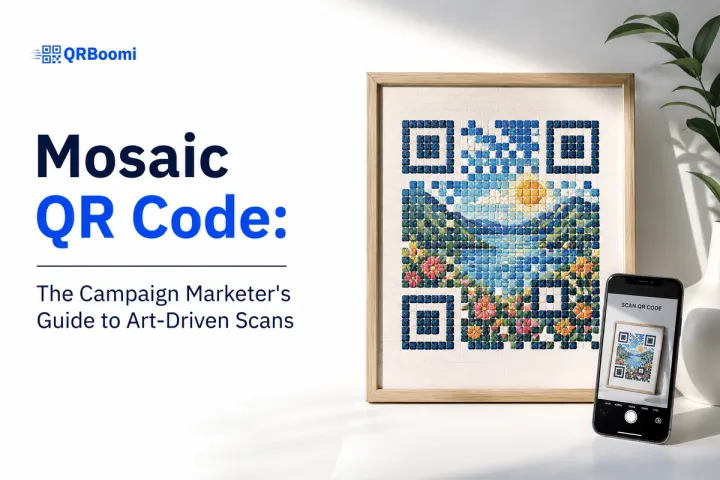
Most brands think a mosaic QR code is a design stunt. A giant tile mural on a building wall, a floor installation at a trade show, a branded piece of street art that happens to be scannable. And visually, sure, it is impressive.
But here is what the design conversation misses entirely: what happens when someone scans it?
If the scan goes to a static URL that cannot be changed, you cannot update the destination after deployment. You cannot run an A/B test. You cannot track which location drove the most scans, or which day of the week your outdoor installation peaks. You spent the money on the art. You got zero campaign intelligence back.
This post is for marketers who want to do it differently. We will cover what a mosaic QR code actually is, where it performs best, and how to run it as a real campaign with scan tracking, dynamic destinations, and measurable outcomes.
What Makes a Mosaic QR Code Different From a Standard One
A standard QR code is a small printed square. It does the job. A mosaic QR code is the same code, scaled up and built from materials or image tiles that give it a visual identity beyond the pattern itself.
The actual QR structure is identical. The data modules, finder patterns, and error correction work exactly as they do in a palm-sized code. What changes is how it is built and where it lives. Mosaic QR codes typically appear in these forms:
- Tile mosaics: physical ceramic, glass, or painted tiles arranged on a wall or floor
- Image mosaics: hundreds of small photographs arranged so the composite forms a scannable QR pattern
- Large-format prints: oversized vinyl or printed banners where the QR is the primary visual element
- Natural material installations: stones, seeds, plants, or fabric arranged as a QR at events or exhibitions
- Building-scale murals: painted or projected QR designs on exterior walls for outdoor campaigns
What does not change is the underlying behavior. The code still scans. The question is whether it scans to something worth scanning to, and whether the brand gets any data back from that interaction.
| Feature | Standard QR Code vs. Mosaic QR Code |
|---|---|
| Physical size | Small (typically 1 to 5 cm) vs. Large format (wall, floor, installation) |
| Visual impact | Functional, minimal vs. Brand-forward, artistic, attention-driving |
| Placement | Packaging, flyers, screens vs. Buildings, floors, events, murals |
| Scan distance | Close range vs. Can be scanned from several metres away |
| Campaign role | Utility code vs. High-visibility campaign anchor |
| Static vs. Dynamic | Either vs. Should always be dynamic for campaign control |
Where Mosaic QR Codes Actually Perform Well
The physical scale of a mosaic QR code is both its advantage and its constraint. It earns attention in high-footfall environments where a small printed code would be invisible. The challenge is context: the viewer needs to be at the right distance, with their camera already pointed in the right direction.
Across QRBoomi campaigns, the placements that consistently drive the highest scan-to-action rates share one trait: the scan is an obvious next step, not an accident.
Trade Shows and Exhibition Floors
A mosaic QR code built into a booth floor or back wall gives attendees something visually distinct to photograph and share. More practically, it gives brands a high-volume scan point in an environment where people are already in discovery mode. Linking the scan to a product catalogue, lead capture form, or exclusive demo booking makes the installation work as a campaign asset, not just decor.
Retail Environments and Flagship Stores
A mosaic QR code on a feature wall or floor directs foot traffic to loyalty sign-up pages, limited-time offers, or product stories that packaging cannot tell. Retail brands using dynamic codes in QRBoomi can update the destination based on season, campaigFn phase, or promotion without touching the physical installation.
Outdoor and OOH Campaigns
A building-scale QR mural is its own PR moment. When it is dynamic, it is also a campaign endpoint: the brand can run time-sensitive promotions, change the landing page for different audience windows (morning commuters vs. weekend traffic), and track scan volume by time, device, and location. Static codes cannot do any of that.
Branded Events and Activations
Mosaic QR codes at events serve double duty: they are a shareable visual (Instagram, TikTok) and a functional campaign touchpoint. A dynamic code lets brands run different destinations at different stages of the event: registration before doors open, a product demo link during the show, and a post-event follow-up page after. One installation, three campaign moments.
The Mosaic QR-to-Campaign Framework: Making the Installation Work
Most brands treat a mosaic QR code as a finished product. Build the installation, point it at a URL, done. The Mosaic QR-to-Campaign Framework reframes it as the start of a campaign lifecycle with three distinct phases.
Phase 1: Design for Scannability, Not Just Aesthetics
A mosaic QR code has to scan reliably before it earns any campaign value. The most common failure point is contrast: the light modules and dark modules need to remain visually distinct even when the surrounding design is complex. High error correction (QR error correction level H) gives the most tolerance for visual customization without losing scannability.
Practically, this means testing the code at the intended viewing distance before production. A code that looks striking from two metres may not scan until you are standing directly underneath it.
Phase 2: Always Use a Dynamic Code
This is the step that separates a campaign from an installation. A dynamic QR code means the physical art can stay in place for months or years while the destination adapts to each campaign phase. The QR pattern itself never changes. Only the destination does.
Why dynamic matters here more than anywhere else: A mosaic QR code installation is expensive to build. Replacing or rebuilding it to point at a new URL is not realistic. With a static code, you are locked into the original destination forever. With a dynamic code in QRBoomi, you can run a new campaign through the same physical asset every quarter.
Phase 3: Track Every Scan as a Data Point
Each scan from a mosaic QR code should return: when it happened, what device was used, where the scan originated (if you have multiple installations), and what the user did after landing. Without scan analytics, you cannot answer the one question every campaign budget decision requires: did it work?
QRBoomi's scan analytics give you scan volume by time of day, device breakdown, and geographic distribution. For mosaic installations at multiple locations, you can run a single campaign with location-tagged dynamic codes to compare performance across sites without separate URLs.
Static vs. Dynamic Mosaic QR Codes: The Campaign-Critical Difference
If you are investing in a mosaic QR code, the static vs. dynamic decision matters more here than almost anywhere else in QR marketing. Here is why.
| Static Mosaic QR Code | Dynamic Mosaic QR Code (QRBoomi) |
|---|---|
| Destination locked at creation | Destination editable any time |
| No scan analytics | Full scan tracking: time, device, location |
| One campaign use, then obsolete | Unlimited campaign phases through one installation |
| Cannot A/B test destinations | Run multiple destination tests simultaneously |
| No way to know if it is working | Real-time scan data and conversion tracking |
| Common in art installations | Required for any campaign-driven deployment |
The rule is simple: if the mosaic QR code is art for art's sake, static is fine. If it is a campaign touchpoint, static is a dead end.
Practical Design and Scannability Guidelines
The QR code specification is more flexible than most people realize. Error correction level H (the highest) allows up to 30% of the code's surface to be obscured or stylized without breaking scannability. That is significant room for a mosaic artist or designer to work with.
| Design Element | Minimum Requirement | Best Practice for Campaigns |
|---|---|---|
| Contrast ratio | 3:1 (light vs. dark modules) | 4.5:1 or higher for outdoor and variable lighting |
| Quiet zone (border) | 4 module widths | 6 module widths for large-format installations |
| Error correction | Level M (15%) minimum | Level H (30%) for maximum design flexibility |
| Module size at viewing distance | 1 cm per metre of viewing distance | 1.5 cm per metre for outdoor placement |
| Colour choice | Dark on light only | Dark green on cream outperforms black on white in brand tests |
| Logo overlay | Up to 10% of code area | Centre placement only; test before production |
Six Mosaic QR Code Campaign Ideas That Actually Drive Scans
- Floor installation at events linking to a live product demo booking page. Update the destination after each session to keep availability current.
- Retail wall mural tied to a loyalty program sign-up. Track sign-up rates by store location using location-tagged dynamic codes in QRBoomi.
- OOH building mural for a product launch. Start with a teaser landing page pre-launch, switch to the product page on release day, move to a reviews or referral page after.
- Packaging art campaign where the mosaic pattern across multiple SKUs scans to a combined brand story page or promotion.
- Pop-up experience QR floor that changes destination between morning, afternoon, and evening sessions to match programming.
- Permanent office or showroom installation that rotates through seasonal campaigns without any physical changes.
Key Takeaways
- A mosaic QR code uses tiles, images, or physical materials to build a large-format scannable code that earns visual attention at scale.
- The QR structure is identical to a standard code. Scannability depends on contrast, quiet zone, and error correction level, not the materials used.
- Dynamic mosaic QR codes let brands run multiple campaigns through one physical installation by updating the destination without rebuilding the art.
- Scan analytics on every mosaic QR deployment tell you which locations perform, what devices your audience uses, and when scan rates peak.
- The Mosaic-to-Campaign Framework turns an installation into a campaign lifecycle: design for scannability, go dynamic, then track every scan as a data point.
- Static codes are fine for art projects. For any campaign with a budget and a goal, dynamic is non-negotiable.
QRBoomi POV
A mosaic QR code that cannot be updated, tracked, or optimized is just expensive wallpaper. The visual scale earns the first scan. The campaign behind it earns the conversion, the data, and the ROI that justifies the installation budget. QRBoomi gives mosaic QR campaigns the same scan-to-outcome infrastructure we build into every campaign: dynamic destinations, real-time analytics, and branded landing pages that convert. The art gets the attention. We give you the campaign.
Frequently Asked Questions
A mosaic QR code is a large-format QR code built from tiles, images, photographs, or physical materials arranged to form a scannable QR pattern. The underlying code structure is standard; what changes is the scale and the materials used to construct it, giving brands a visually impactful campaign touchpoint in high-footfall environments.
Yes, if the module size is proportional to the intended viewing distance. The standard guideline is approximately 1cm of module size per metre of viewing distance. For outdoor installations, 1.5cm per metre gives better reliability in variable lighting. Error correction level H provides the most tolerance for design customization without breaking scannability.
Always dynamic for any campaign use. A static mosaic QR code locks the destination permanently, which means no updates, no analytics, and no ability to run multiple campaigns through the same installation. A dynamic code in QRBoomi lets you change the destination, track scans in real time, and run new campaigns through the same physical asset without any changes to the artwork.
With a dynamic QR code, every scan returns data: timestamp, device type, geographic location, and scan volume over time. In QRBoomi, you can also tag multiple installations with unique identifiers so you can compare scan performance across locations running the same campaign. Static codes return no tracking data at all.
Error correction level H is the best choice for mosaic QR codes. Level H allows up to 30% of the code's surface to be obscured or stylized while remaining scannable, giving designers and artists the most flexibility to incorporate visual elements without compromising function. Lower error correction levels restrict design options significantly.
An artistic or custom QR code is typically a small code with branded colors, logos, or design elements. A mosaic QR code is large-format and built from physical or composite materials at installation scale. Functionally, both can be dynamic or static. The campaign approach is the same; the execution context and visual scale are different.
Retail brands use them in flagship stores and pop-ups to drive loyalty sign-ups and promotions. Event and experiential marketers use them as high-visibility scan points at trade shows and activations. OOH advertisers use building-scale mosaic murals for product launches. Any brand running a physical-to-digital campaign in a high-footfall environment can use them effectively.