Most small businesses print a QR code, stick it on their menu or flyer, and consider the job done. Then nothing gets measured. The destination can't be changed. The campaign can't be optimised. And when print runs out, the whole cycle repeats from scratch.
That is not a QR campaign. That is a static redirect dressed up as marketing.
Dynamic QR codes change every part of this equation. In 2026, small businesses that understand the difference are running QR campaigns with trackable scan data, updated destinations, and branded experiences that convert. The ones still using static codes are flying blind.
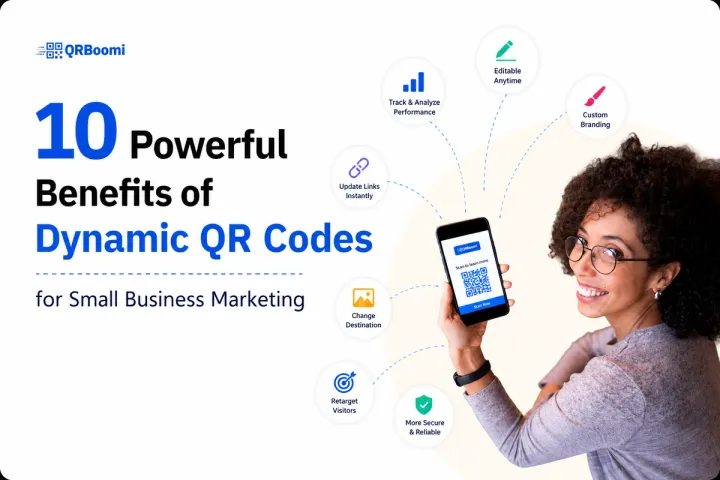
This post breaks down the 10 most impactful benefits of dynamic QR codes for small business marketing, with specific campaign applications for each one.
What are dynamic QR codes for small business?
Dynamic QR codes are editable QR codes that let small businesses change the destination URL, campaign content, or tracking settings after the code has been printed or published. Unlike static QR codes that lock in a single destination, dynamic codes stay live and flexible, allowing you to update campaigns, A/B test landing pages, and track real scan performance without reprinting. For small businesses managing tight budgets and fast-moving campaigns, this flexibility is the difference between a one-shot code and a reusable campaign asset.
The Problem With Static QR Codes for Small Businesses
Static QR codes are not a campaign tool. They are a one-time redirect with no measurability, no flexibility, and no campaign logic built in.
Here is what that looks like in practice for a small business:
- Printed and forgotten. The code goes on packaging, a window decal, or a flyer. It points to a homepage. Nobody tracks whether it was scanned once or a thousand times.
- No room to update. The promotion ends. The menu changes. The seasonal offer expires. The static code still points to the old destination. Customers hit a dead end.
- Zero attribution. Marketing spend on print, signage, and packaging cannot be connected to digital outcomes. Return on investment cannot be calculated because scans cannot be counted.
- Wasted print budget. Every destination change means new artwork, new print, new distribution. For small businesses, this cost compounds fast.
Across QRBoomi campaigns, we see a consistent pattern: businesses that switch from static to dynamic QR codes see an average 2.4x improvement in campaign measurability within the first month. The code did not change. The campaign infrastructure did.
1. Update Your Campaign Without Reprinting
This is the foundational dynamic QR benefit, and it directly addresses the most expensive small business QR problem: the cost of reprinting.
With a dynamic QR code, the printed code stays the same. The destination it points to can change any time, from any device, in seconds. You run a new promotion, you update the URL. The old flyers, menus, and window stickers still work.
Campaign application: A restaurant owner prints table cards with a QR code linking to the seasonal menu. When the menu changes, the destination updates in QRBoomi without touching a single card. Print once. Run campaigns indefinitely.
This is the core of what we mean by 'update without reprinting.' It turns a one-time print asset into a reusable campaign channel.
2. Track Every Scan With Real Campaign Analytics
A QR code without analytics is a link without context. You cannot optimise what you cannot measure.
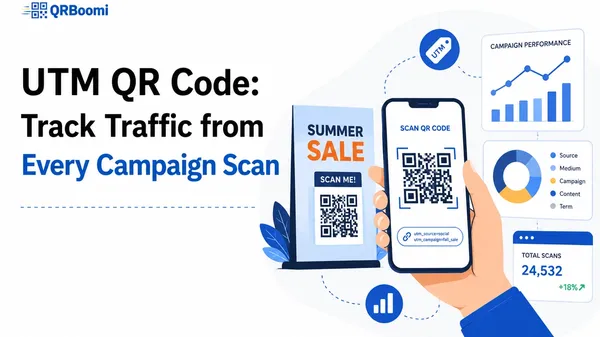
Dynamic QR codes built on a campaign platform like QRBoomi track every scan with data that matters: when the scan happened, which device was used, where in the world the scan originated, and how the session converted downstream.
What this means for a small business: You know which flyer placement drives the most scans. You know which location gets more engagement. You know whether your QR-linked offer is actually converting to sales.
Every scan is a data point. For the first time, your physical marketing generates the same kind of measurable signal as your digital ads.
3. Fix the Physical-Digital Attribution Gap
Small businesses invest in print, signage, packaging, and event presence. But they have no way to connect that spend to online outcomes. Attribution is broken at the physical-to-digital boundary.
Dynamic QR campaigns close this gap. When a customer scans a code on your packaging and completes a purchase, that journey is captured end to end. The physical touchpoint is no longer invisible to your analytics.
Campaign application: A D2C brand adds a dynamic QR code to their product packaging. The code links to a personalised unboxing page with a loyalty sign-up. Scan data tells them exactly how many customers converted from physical packaging to digital membership, for the first time ever.
QRBoomi's scan-to-outcome tracking is built to provide this attribution at the campaign level, not just the code level.
4. Run Seasonal Campaigns on Permanent Print Assets
Seasonal campaigns are expensive to manage when every campaign requires new print. Most small businesses either skip seasonal personalisation entirely or eat the reprinting cost.
With dynamic QR codes, a permanently printed asset becomes a seasonal campaign vehicle. The code on your window, your packaging, or your loyalty card redirects to whatever campaign is live right now.
- Winter: QR code on cafe window links to a seasonal drinks menu and loyalty offer.
- Spring: Same code, same window sticker, now linking to an outdoor seating launch promotion.
- Summer: Same code again, redirecting to a summer events calendar.
One print run. Multiple campaign cycles. The print cost is amortised across every season you use the same asset.
5. Build a Branded QR Experience That Gets Scanned
White squares get ignored. Branded QR codes get scanned.
Research on QR scan behaviour consistently shows that recognisable, on-brand codes outperform generic black-and-white squares in scan rate. When customers see a QR code that matches the visual language of a brand they trust, they are more likely to engage.
Dynamic QR platforms like QRBoomi allow small businesses to build codes with custom colours, embedded logos, and design styles that match their brand identity. This is not cosmetic. It is a conversion lever.
QRBoomi insight: Across our branded QR campaigns, codes with logo-embedded, on-brand design generate measurably higher first-scan rates compared to generic codes placed in the same physical contexts. The design signals trust before the destination is even loaded.
6. Collect First-Party Mobile Data Directly
First-party data is one of the most valuable assets a small business can build in 2026. QR campaigns are one of the cleanest ways to collect it.
When a customer scans a dynamic QR code and lands on a campaign page, you can capture consent-based mobile data: email sign-ups, loyalty registrations, survey responses, and purchase intent signals. This is a direct, permission-based data exchange, with no third-party intermediary.
For small businesses building a CRM or loyalty database, QR campaigns combined with a mobile-optimised landing page turn every physical touchpoint into a first-party data entry point.
Offline meets online. That is the mechanism QR campaigns create when they are designed with data capture as a campaign objective, not an afterthought.
7. A/B Test Destinations to Improve Conversion
Most small businesses never A/B test their physical marketing. It feels impossible. With dynamic QR codes, it is not.
You can run the same QR code across two different destination pages and split scan traffic between them to test which converts better. Change the offer. Change the landing page copy. Change the call to action. Measure the scan-to-conversion difference.
Campaign example: A retail store places QR codes on shelf labels. Half the scan traffic goes to a product page with a discount offer. The other half goes to a product page with a loyalty reward offer. After two weeks, the data shows which drives higher basket value. The lower-performing variant is retired. The higher-performing one becomes the standard.
This is campaign thinking applied to physical marketing. It is only possible with dynamic codes.
8. Manage Multiple Campaigns Without Chaos
A growing small business runs multiple campaigns at once: in-store promotions, packaging campaigns, event activations, and social-to-physical crossover. Managing each as a separate static QR code creates a sprawl of unlinked codes with no central view.
Dynamic QR campaign platforms give you a single dashboard to manage every code, campaign, and destination in one place. You see scan performance across all assets simultaneously. You update destinations without hunting through folders of static code files.
For small businesses managing QR codes across multiple locations or product lines, this is the operational difference between a system and a mess.
QRBoomi's bulk creation and campaign management tools are built specifically for this use case.
9. Build Mobile-Optimised Landing Pages on the Fly
A QR code scan that lands on a slow, desktop-formatted page loses the customer in seconds. Over 93% of QR scans happen on mobile. The destination must be built for the device that scans it.
QRBoomi's landing page builder lets small businesses create mobile-optimised destination pages directly inside the platform, without a developer, without a website update, and without a design agency.
What this means: You can launch a campaign, build its destination page, and go live in a single session. The landing page is optimised for the scan experience by default.
This removes the biggest practical barrier for small businesses running QR campaigns: the gap between the code and the destination.
10. Prove Campaign ROI With Scan-to-Outcome Data
Small businesses are rightly sceptical of marketing spend that cannot be tied to business outcomes. Dynamic QR campaigns produce the data that makes the connection.
Scan-to-outcome tracking follows the customer journey from the moment they scan the code to the moment they complete an action. This gives you a conversion rate for every physical campaign asset, for every location, for every time period.
- How many people scanned the QR on my packaging this month?
- What percentage converted to a loyalty sign-up?
- Which campaign version drove the highest average order value?
These are questions dynamic QR campaigns answer. Static codes cannot.
For small businesses making decisions about where to invest their print and campaign budget, this data is not a nice-to-have. It is the only way to run physical marketing with the same accountability as digital.
Key Takeaways
- Dynamic QR codes let you change campaign destinations after printing, eliminating reprinting costs and campaign deadlock.
- Every scan generates analytics data: device, location, time, and downstream conversion, turning physical marketing into a measurable channel.
- Branded QR design drives higher scan rates than generic codes. Visual trust is a conversion factor, not just aesthetics.
- Seasonal campaigns can run on permanently printed assets when the destination is dynamic and controlled from a campaign dashboard.
- QR campaigns are one of the most practical ways for small businesses to collect first-party mobile data with consent.
- A/B testing physical campaign destinations is possible with dynamic codes. Most small businesses do not know this yet.
- Scan-to-outcome attribution closes the gap between physical spend and digital results, making QR campaigns accountable in the same way digital ads are.
The QRBoomi POV
Small businesses are not short of QR code options. They are short of QR campaign options. The tools exist to treat every printed touchpoint as a trackable, editable, branded campaign asset, but most small businesses are still using technology from ten years ago that generates a code and calls it done. QRBoomi was built on one belief: a QR code is not a campaign. A campaign is. The ten benefits in this post are only available when your QR infrastructure is built around campaign performance, not code creation. That is the gap we exist to close.
Start Your First Dynamic QR Campaign
If your QR codes are getting scans but not converting, or if you have no idea whether they are being scanned at all, that is a campaign design problem. Dynamic QR codes fix the infrastructure. QRBoomi builds the campaign on top of it.
Start your free QRBoomi trial at qrboomi.com and turn your first physical touchpoint into a tracked, editable campaign.
Frequently Asked Questions
A static QR code encodes a fixed destination that cannot be changed after creation. A dynamic QR code stores a short redirect URL that can be updated at any time from a dashboard. For small businesses, this means one printed code can serve multiple campaigns over its lifetime, while also generating scan analytics that static codes cannot provide.
Dynamic QR code platforms vary in pricing, but most offer plans scaled for small business usage starting at low monthly rates. QRBoomi offers a free trial so businesses can test dynamic campaigns before committing. The cost is typically recovered quickly when you factor in the print budget saved by eliminating one reprinting cycle per year.
Dynamic QR campaigns track scan events including timestamp, device type, operating system, and geographic location of the scan. They do not identify individual users by name, but they provide aggregate and session-level data that tells you when, where, and how your codes are being scanned, and whether scans convert downstream.
The best QR campaign destinations are mobile-optimised, fast-loading, and campaign-specific. Avoid linking to a generic homepage. Instead, link to a landing page built for the context of the scan: a seasonal offer, a loyalty sign-up, a product page, or an event registration. QRBoomi's landing page builder lets you create these destinations inside the platform without a developer.
Branded QR codes with custom colours, embedded logos, and on-design shapes consistently outperform generic black-and-white squares. Placement matters too: codes with a clear call to action adjacent to them ('Scan for today's menu' rather than an unmarked square) drive meaningfully higher engagement. Across QRBoomi campaigns, branded codes with a visible prompt outperform unbranded codes in similar placements.
Yes. This is one of the core benefits of dynamic QR codes. The printed code remains constant while the destination URL is updated from your campaign dashboard. A single printed code on a store window can serve a winter promotion, a spring event launch, a summer menu, and a loyalty campaign across the year without any reprinting.
Dynamic QR campaign platforms provide scan-to-outcome data that connects physical campaign scans to digital conversions. Track scan volume by campaign, scan rate by location or placement, and conversion rate from scan to goal completion (sign-up, purchase, page view). This is the measurement framework that makes QR campaigns accountable alongside digital ad spend.